
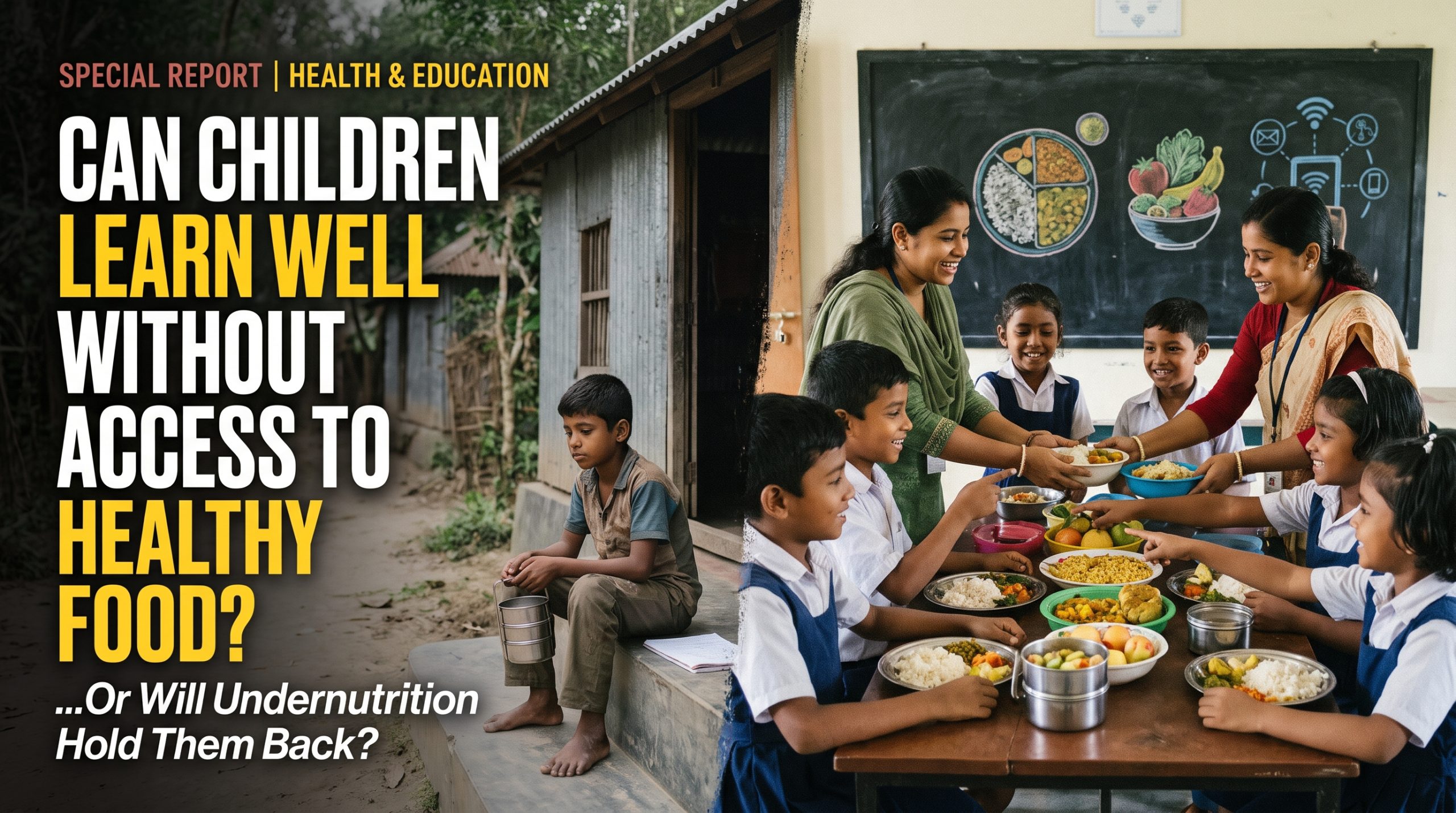
Nutrition is critical for kids’ growth, concentration and learning. Many children, however, have barriers to access to a balanced diet. There is a situation of undernutrition in the country, as well as unhealthy food environments in Bangladesh, such as poverty where nutritious foods might be inaccessible.
UNICEF’s Bangladesh MICS 2025 reports that one-quarter (24%) of children under 5 are too short for their age – stunted as a result of chronic or recurrent undernutrition. This is an indicator for young children not for school going children, but indicates the broad nutrition issues among children in Bangladesh. Eating right isn’t as simple as getting enough food for school-age kids. It also has to do with the diversity, quality and prices of the food they are taking.
Children must have healthy eating habits to support growth and to be able to move around and engage in classroom activities. Hunger and a poor quality diet will make concentration difficult and may hinder physical growth and health. Chronic forms of undernutrition and micronutrient deficiencies have long term effects on development. Diets high in salt, sugar and/or unhealthy fats also can result in poor health over time.
Children in low-income families are especially at risk due to food costs and financial strain on their families. Children attending the schools may also have the opportunity to access more packaged snack items than fresh fruit or vegetables in close proximity to their schools. If a child already has a nutritional issue with may require further help from families, school or health professionals.
School food environment in Bangladesh are mentioned in UNICEF Child Nutrition Report 2025. 61% of adolescents surveyed reported that there was packaged snacks available in their school food environment and 49% that there was fresh vegetables and/or fresh fruits available. These findings indicate the presence of less healthy products in settings compared to more healthy products. The results from UNICEF’s MICS 2025 also show that 64.8% of children from 6-23 months were in child food poverty, that is, they had less than adequate dietary diversity. This is for infants and toddlers but does provide an idea of the magnitude of dietary problems for young children.
This is due to the poverty level among households; high food prices; and poor nutrition awareness and the equal access to a healthy diet. Some parents might know how important it is to feed their kids healthy meals, but may not have the financial resources or time to make healthy meals on a frequent basis. The schools might not have any formal nutrition programmes, healthy pricing on food offered in school, or food standards guidelines.
If not intervened, children will persist in having poor nutrition and poor nutritional status. These issues can have impacts on health, development and full participation to school. The poor nutrition habits that are formed during childhood can persist into adulthood, which can lead to future health troubles.
A comprehensive strategy is required to ensure that schools enable healthy eating, and that it makes sense and is easy to carry out. Nutrition education, access to safe drinking water, and better school food environments and school affordable nutrition are included. Schools should collaborate with parents, health care providers and food services to reduce the work involved in making healthy options a reality. Interactive learning can help children in practical understanding of nutrition. As an example, NutriFun being developed under the Reflective Teens programme can be of great relevance, offering a proposed 45-minute session for Classes 4 and 5, comprising a presentation, questions and answers, discussion on healthy-tiffins and the tasting of food, followed by a quiz. While nutrition awareness sessions can be effective for children to make a link between nutrition and the choices they make every day, it is important that these do not take priority over providing access to healthy foods.
All children should have the chance to grow, learn and be healthy. Enabling children to eat well in school is more than communicating nutrition information; it’s enabling access to and affordability of healthier food options. With a combination of education and support and better school environments, Bangladesh can begin to make steps towards improving the health and education for children.
Reference
Bangladesh data on the situation of children, UNICEF Bangladesh
https://www.unicef.org/bangladesh/en/data-situation-children-bangladesh
2. UNICEF Child Nutrition Report 2025: Feeding Profit: How Food Environments are failing Children
https://www.unicef.org/media/174091/file
This is the Bangladesh Multiple Indicator Cluster Survey (MICS) 2025 Final Report.
https://www.unicef.org/bangladesh/en/reports/bangladesh-multiple-indicator-cluster-survey-2025-0
